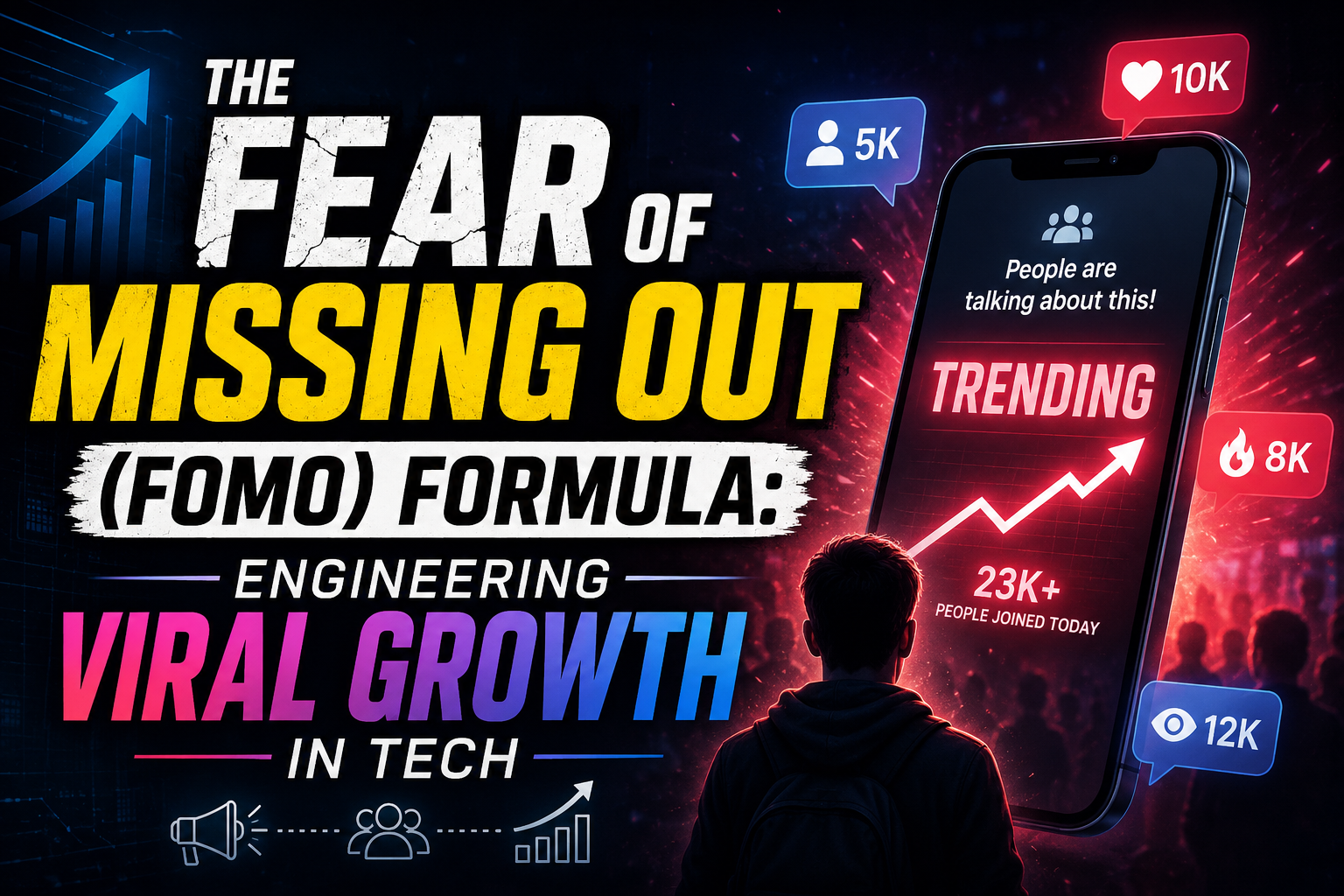
In the relentless echo chamber of the tech industry, the Fear of Missing Out—commonly known as FOMO—is often dismissed as a mere psychological byproduct of our hyper-connected lives. We scroll through LinkedIn, witnessing peers launch startups, ship groundbreaking features, or land prestigious roles at FAANG companies, and a subtle anxiety takes hold. But to view FOMO solely as an emotional vulnerability is to miss a massive strategic opportunity.
As an engineer, product manager, or growth hacker, understanding and harnessing the FOMO formula transforms it from a personal anxiety into a highly calibrated engine for user acquisition, retention, and viral growth. Let us deconstruct the anatomy of FOMO and explore how the most successful tech products engineer this psychological trigger into their very architecture.
The Anatomy of the FOMO Formula
FOMO does not happen by accident. The most addictive platforms and successful product launches rely on a specific, replicable formula. At its core, the FOMO formula can be expressed as:
FOMO = (Perceived Value + Scarcity) × Social Proof × Urgency
When these four elements intersect, a psychological pressure cooker is created. Users are compelled to act not just because they want the product, but because they are terrified of being left behind by their peers. Let's break down each variable.
1. Perceived Value and Scarcity
Value alone does not trigger FOMO. A product must be desirable, yes, but it must also be difficult to obtain. Scarcity hacks the human brain's ancient resource-allocation mechanisms. In tech, scarcity is rarely about physical limitations; it is almost always artificially engineered.
Consider the early days of Clubhouse or the initial rollout of Gmail. The perceived value of these networks was amplified exponentially by the fact that you simply could not get in. Scarcity creates a velvet rope. When users finally cross that threshold, their commitment to the product skyrockets because they had to invest social or temporal capital to gain entry.
2. The Multiplier Effect: Social Proof
Scarcity in a vacuum is merely frustrating. Scarcity combined with social proof is intoxicating. Social proof is the psychological phenomenon where people assume the actions of others reflect correct behavior. If the smartest engineers in your network are all adopting a new CI/CD tool, the implicit message is that you are falling behind by not using it.
Tech companies engineer social proof through "waiting list" dynamics, public contributor counts on GitHub repositories, and visible user activity feeds. When a user sees that a competitor or a respected peer has adopted a tool, the fear of being outpaced technologically or professionally overrides the friction of switching costs.
3. The Catalyst: Urgency
The final component is urgency. Without a ticking clock, users will procrastinate on their decisions. Urgency forces the emotional trigger of FOMO into an actionable conversion.
In the SaaS and developer tool space, urgency is often manifested through time-limited beta access, expiring API credits, or early-bird pricing for conferences. It is the digital equivalent of a flashing red light, signaling that the window of opportunity is closing.
Engineering FOMO in Product Architecture
Understanding the theory is only half the battle. The real mastery lies in embedding this formula into your product's architecture and user experience. Here is how top-tier tech teams execute the FOMO formula in practice.
The Waitlist and Invite-Only Mechanism
The invite-only model is the purest distillation of the FOMO formula. By restricting access, you immediately establish scarcity. To amplify social proof, platforms display the user's position in the queue.
A classic implementation involves gamifying the waitlist. Users can jump the queue by referring friends, effectively turning their user base into a viral marketing army.
Here is a simplified logic representation of a viral waitlist scoring system:
def calculate_waitlist_priority(user):
    base_score = user.signup_timestamp
    referral_bonus = user.referral_count * 86400  # 1 day jump per referral
    social_multiplier = 1.0

    if user.has_twitter_connection:
        social_multiplier += 0.2
    if user.has_linkedin_connection:
        social_multiplier += 0.2

    # Lower score means higher priority (earlier signup equivalent)
    effective_score = base_score - (referral_bonus * social_multiplier)

    return effective_score
By giving users a tangible way to improve their standing, you keep them engaged even before they have access to the actual product.
Real-Time Activity Notifications
Nothing triggers FOMO quite like seeing action happen in real-time. E-commerce platforms use this brilliantly ("15 people bought this in the last hour"). In B2B tech and SaaS, this translates to live deployment feeds, recent sign-up notifications, and real-time collaboration cursors.
When a developer logs into a new platform and sees a dashboard notification stating, "Your competitor at [Company Name] just deployed a new microservice using our tool," it creates an immediate, urgent need to explore the platform's capabilities.
Exclusive Tiered Access
Once a user is inside the product, FOMO can be used to drive upsells and deeper engagement. Tiered pricing models (e.g., Free, Pro, Enterprise) inherently create a FOMO dynamic. By placing highly desirable features—like advanced analytics, custom integrations, or increased rate limits—behind a higher paywall, you create a persistent, low-level anxiety for free-tier users.
Displaying these locked features in the UI with a subtle "Upgrade to Pro" overlay ensures users are constantly reminded of what they are missing out on. The goal is to make the free tier useful enough to retain the user, but restrictive enough to make the paid tier highly desirable.
The Ethical Boundary: Growth vs. Manipulation
As a tech professional, wielding the FOMO formula requires a strict ethical compass. There is a fine line between persuasive design and manipulative coercion.
Dark patterns—such as fake countdown timers that reset upon page refresh, or fabricated social proof notifications—can drive short-term metrics. However, they fundamentally erode user trust. In the modern tech ecosystem, where user privacy and data ethics are under intense scrutiny, burning trust for a temporary spike in conversions is a losing long-term strategy.
Ethical FOMO relies on transparency. If you claim a beta is limited to 1,000 users, honor that limit. If you offer a time-sensitive discount, let it expire. The most successful tech brands use FOMO to highlight genuine value and real scarcity, rather than manufacturing artificial anxiety.
Conclusion
The Fear of Missing Out is a fundamental aspect of human psychology, deeply wired into our social and survival instincts. In the technology sector, it is a currency traded through product launches, framework updates, and exclusive communities.
By mastering the FOMO formula—balancing perceived value, scarcity, social proof, and urgency—you can engineer products that not only acquire users rapidly but retain them through deeply ingrained psychological investment. However, the true mark of a master tech craftsman is knowing where to draw the line. Use the formula to amplify genuine value, not to mask an inferior product. Build something truly worth missing out on, and let the psychology do the rest.